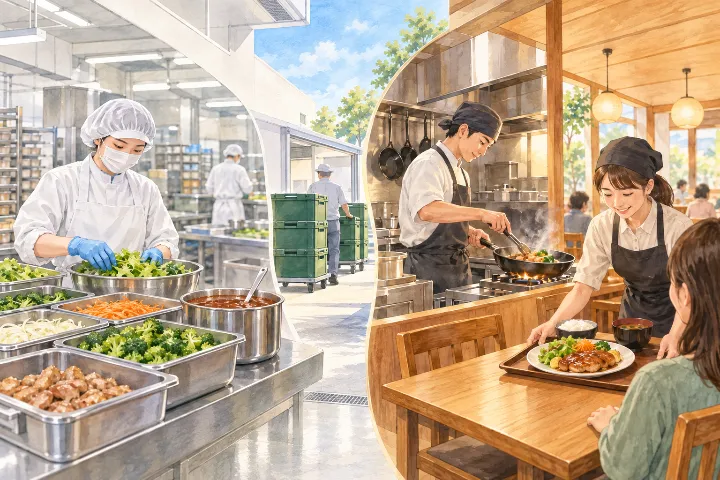
The part of your meal you cannot see
You find a dish that does not list a food you need to avoid. That is useful information—and a welcome first step. But as you look at the menu, another question may come to mind: what happened to this dish before it reached your table?
A restaurant kitchen is rarely visible from your seat. If you have a food allergy, how a meal is prepared may matter as much as what the recipe lists.
What happens in a central kitchen?
It is easy to imagine a chain restaurant receiving fully finished meals and simply reheating them. In reality, the division of work varies by chain and product. A central kitchen might chop ingredients, make sauces, or partially prepare a dish; the restaurant may then cook and plate it. Other products may follow a different route.
That means there may be more than one place to ask about. Information about manufacturing does not automatically describe what happens in the branch where you order. For a specific item, start with the restaurant’s published information and ask about its current preparation process.
No listed ingredient does not mean no cross-contact
A kitchen might use the same tongs, fryer, grill, or chopping board for different foods. When allergen proteins move from one food to another through shared equipment or surfaces, that is called cross-contact. It is different from intentionally using an ingredient in a recipe.
Shared equipment does not tell you, on its own, exactly what happened to a particular meal. Procedures for cleaning and separating work differ, and individual medical needs differ too. The useful question is not whether all chain kitchens are “safe” or “unsafe,” but what happens to the dish you are considering.
Questions worth asking before you order
Tell the restaurant which food you need to avoid, then ask about both the ingredients and the preparation. If the team cannot answer during a busy service, contacting the chain ahead of time may help.
- Is the food I avoid used in this dish, its sauce, or its toppings?
- Are fryers, grills, pans, or utensils shared with other dishes?
- Is any part prepared off-site, and what information is available about that process?
- Can this location use separate, cleaned equipment and a separate preparation area?
Where Food Safety Search fits in
Food Safety Search helps you browse allergen information published by restaurant chains and narrow down menus using the foods you want to avoid. It is a place to begin your research and follow up with the original restaurant information.
It cannot see today’s equipment, staff procedures, or every possible instance of cross-contact at a particular location. Once you find a promising dish, check the latest official information and ask the restaurant about the parts of preparation that matter to you. A good meal starts with a better question.