“There is no meat, so it should be fine”—or is it?
I was sitting in a Japanese restaurant with a vegetarian friend visiting from overseas. The menu looked full of promising choices: vegetable tempura, tofu, noodles, and small dishes of beautifully prepared vegetables.
Then we came across one small word that changed the conversation: dashi. It is often invisible, yet it can determine whether an otherwise vegetable-based dish suits someone’s dietary requirements.
What is Japanese dashi made from?
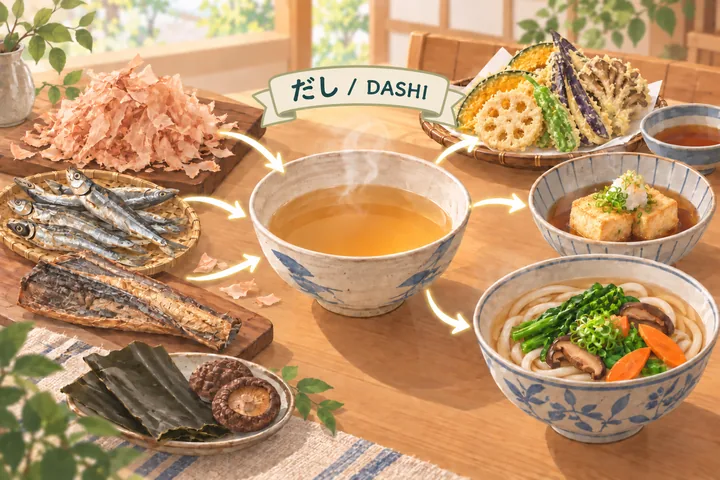
Dashi is a stock made by drawing flavour from ingredients in water. It may use bonito flakes, dried sardines, mackerel or other fish. It can also be plant-based, using kombu seaweed, dried shiitake mushrooms, or vegetables. Blended stock may combine more than one ingredient.
Asking “Does this contain dashi?” is only the beginning. The more useful question is: “What is the dashi made from?”
Vegetable dishes that are worth checking
Fish-based dashi can appear in food with no visible meat or fish. Recipes vary, but these familiar dishes are worth checking.
- Vegetable tempura: the vegetables may be suitable, while the dipping sauce contains fish stock.
- Soba and udon: check the broth as well as the noodles and toppings.
- Agedashi tofu: the tofu is served in a savoury sauce that may contain dashi.
- Dashimaki tamago: even vegetarians who eat eggs may need to check the stock mixed into the omelette.
- Ohitashi and simmered vegetables: vegetables may absorb dashi during cooking.
- Ponzu, noodle sauce, and dressings: some products include bonito extract or dashi, although not all do.
Why an English menu may not tell the whole story
“Vegetable Tempura,” “Tofu,” or “Vegetable Noodles” usually describes the main ingredient. It may not explain what is in the broth, sauce, or seasoning. The word “vegetable” does not automatically mean vegetarian.
Try asking: “Does this contain fish-based dashi, such as bonito or dried sardines?” You can also ask whether the stock uses only kombu or shiitake, and whether the dipping sauce contains fish ingredients. Specific questions are more useful than asking only whether a dish has visible fish.
Dashi can matter beyond vegetarian diets
Hidden fish ingredients are relevant not only to vegetarians and people with religious or cultural food requirements. Someone with a fish allergy may also need to check stocks, sauces, and extracts.
The fish species that cause reactions and the required level of avoidance vary. Follow medical guidance and ask the restaurant about current ingredients, preparation methods, and shared cooking equipment before ordering.
Use Food Safety Search as a starting point
Food Safety Search brings together publicly available allergen information published by restaurant chains. You can select foods you want to avoid—such as mackerel—and review the available menu information in one place.
Food Safety Search does not identify every kind of dashi, including bonito, dried sardine, or flying-fish stock. Use it to begin your research, then check the restaurant’s latest official information and ask about the broth, sauces, and seasonings. Understanding dashi is not a reason to give up on Japanese food; it is a way to find choices that better match your needs.