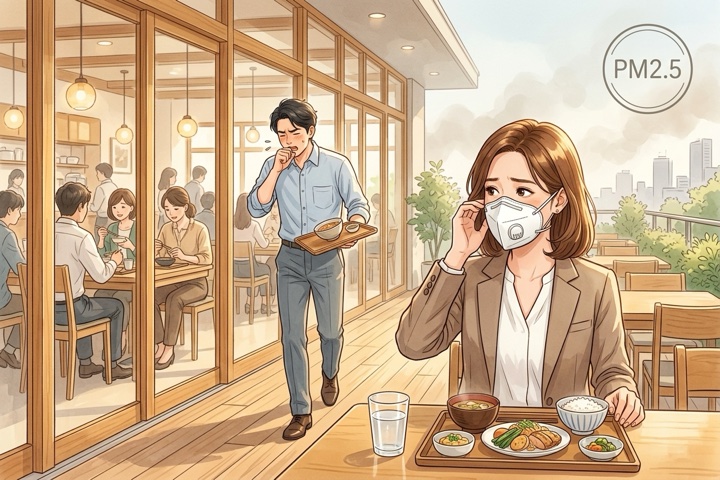
A packed indoor cafeteria and a hazy outdoor lunch deck
On days when haze turns the sky milky gray and leaves a faint smoky smell in the air, most people want to eat inside where the air is filtered. Yet through the glass wall, the cafeteria is already packed at lunchtime. Stepping onto the outdoor deck instead, seeing a nearby diner cough from the PM2.5 and nearly drop his lunch tray makes it hard to even take off your N95 mask.
When heavy haze stretches over several days, it is common to notice redness or itching on exposed wrists and necklines alongside a dry, scratchy throat. It is easy to worry: could PM2.5 settling on food trigger a food-allergy-like reaction, or make existing allergies flare up? Once that fear sets in, eating outside loses all appeal.
Can breathing in haze—or eating outdoors in it—cause a food allergy?
In short, inhaling haze or PM2.5—or having trace airborne particles land on a meal—does not directly create a true food allergy. A food allergy is an immune reaction to specific proteins inside foods such as egg, milk, wheat, or shellfish, not to smoke or mineral particulates.
However, fine particulates (PM2.5), smoke compounds, and dry air can damage the skin barrier and irritate the lining of the nose, eyes, and throat. When particles, sweat, and friction meet weakened skin, contact dermatitis or eczema flare-ups become much more likely. Likewise, inflamed airways and skin can make people with asthma, eczema, or existing allergies feel more reactive than usual.
So while haze does not equal a food allergy, it is a real environmental stressor that can irritate your skin and amplify overall sensitivity.
Food allergy vs. haze-related skin irritation: a quick comparison
When a rash or itch appears after lunch on a hazy day, telling a food reaction apart from environmental irritation can be stressful. Doctors generally look at timing, appearance, and accompanying symptoms like these:
| Feature | Food allergy (hives / urticaria) | Haze / PM2.5 skin irritation (contact dermatitis) |
|---|---|---|
| Onset timing | Often appears suddenly within minutes to 2 hours after eating | Tends to build gradually after outdoor exposure or over several hazy days |
| Rash appearance | Raised, well-defined red wheals (hives) that swell above the skin | Dry redness, fine bumps, scaling, or stinging patches |
| How long it lasts | Individual hives usually fade within a few hours to 24 hours without marks | Can linger for days or over a week if irritation continues |
| Where it appears | Anywhere on the body (around the mouth, torso, thighs, etc.) | Mainly exposed or sweat-prone areas (neck, wrists, face, eyelids) |
| Other symptoms | May include stomach pain, nausea, sneezing, coughing, or wheezing | Usually limited to itchy skin or throat scratchiness; rarely causes GI symptoms |
Practical precautions and dining choices on heavy haze days
On high-PM2.5 days, there is no reason to force yourself to eat outdoors. After returning inside, gently rinse exposed areas—face, neck, and wrists—with lukewarm water and a mild cleanser so fine particles do not linger on your skin, then apply moisturizer promptly while your skin is still slightly damp. Indoors, keeping windows shut and running an air purifier helps reduce ongoing irritation.
For meals, skip open-air patios and street stalls when air quality spikes. Choose enclosed, air-conditioned dining rooms or opt for sealed takeout and delivery you can enjoy indoors. Planning around air quality lets you stay nourished without pushing through discomfort.
Checking ingredients calmly from home before you eat
When haze already leaves your throat or skin feeling sensitive, scrambling to check allergen charts on a crowded terrace adds unnecessary stress. Food Safety Search lets you review official allergen and ingredient disclosures from major restaurant chains calmly from home or your desk.
Narrowing down safe menu options before ordering takeout or delivery—and eating comfortably indoors—can make heavy haze days much easier to navigate.